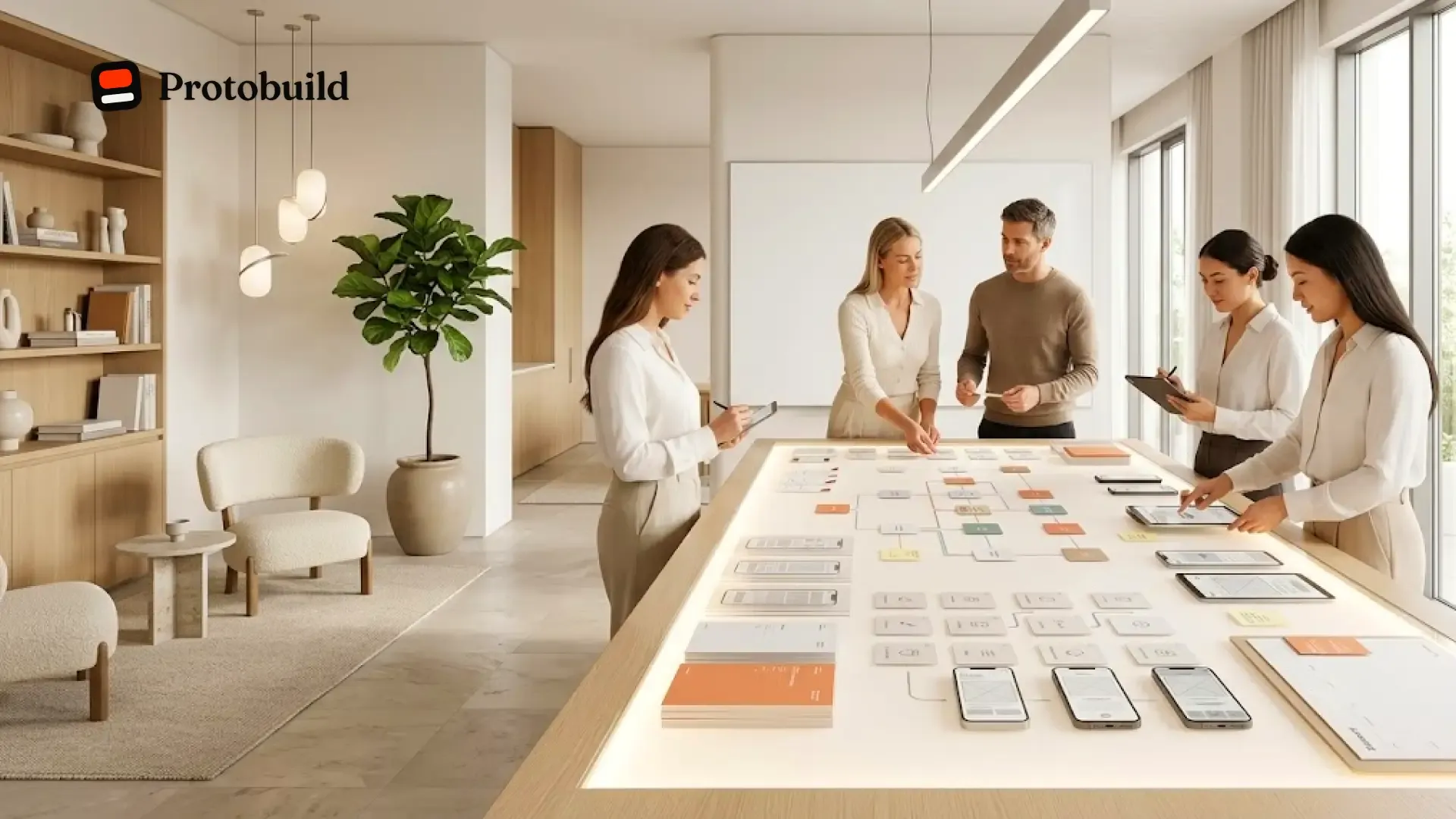
This is something that happens to every agency – a client comes to the office with an interesting idea, a proposal is crafted following a discovery call lasting 30 minutes, everybody signs, and then after 3 weeks of development, the client asks, "Well, actually, could we also make it do this?" The problem is obvious: now there is no way out and the fixed quote goes down the drain while your developers work overtime and the relationship becomes strained.
The reason is quite predictable, it is impossible to quote clients' ideas before the quotation has been figured out by the client and the agency as well. An idea sitting in someone's head is not equal to a specification. The difference between these two concepts is the exact place where the scope creeps in, the costs get overrun and the deadlines get missed. It does not matter how good your contract and the process of handling the changes are. The problem needs to be addressed with prototyping.
Why Prototyping Before Quoting Changes Everything
When you prototype client concepts prior to making an estimate, you take something that is abstract and make it tangible. The client will actually be able to click around in your wireframe or interaction, which will usually prompt them to ask questions or uncover assumptions that they wouldn’t have uncovered in conversation. Typical comments from clients include "Oh, I didn’t know it would require a login step" or "Actually, I want users to see their results before signing up", issues that won’t come out until build time at a higher cost.
And this is how you develop a good prototyping process for your agency: create low-cost, low-risk artifacts that can put pressure on your idea's true shape.to it.
Step 1: Turn the Pitch Into a Problem Statement
Even before you open Figma or whichever prototyping tool you use, you need to spend some quality time with the client. Try to distill everything they say about their idea into one precise problem statement. For example, if they pitch "fitness app", try to restate it as "busy professionals require 15-minute workout at home which does not require looking through extensive library of workouts".
With this small trick you reduce chances of having any future disputes about scope by a large percent as there will be one common document to refer to. Features which do not solve the formulated problem can be easily postponed till phase 2.
Step 2: Create a Low-Fidelity Prototype Fast
Creating a production-ready design solution is unnecessary for validating your ideas. All you need is a low-fidelity clickable prototype which can be created within a couple of days using such apps as Figma, Framer or even HTML mockup. You need to focus exclusively on the primary flow, it consists of only 2 to 4 screens representing basic experience of your application.
This is the main idea behind any prototyping before development quote technique. You do not create a design solution; you create a basis for discussion.
Step 3: Walk the Client Through It Live
Do not just send a URL for the prototype and sit back. Set up a meeting to walk the client through the screens, explaining the expected user flow and asking direct questions like, "How would this be handled if there is no data available yet?" or “Would this be what they see when they arrive, or do they need to go through an onboarding process beforehand?”
That is when the true benefit comes in. The clients will often find out about their own assumptions that they did not even know existed before, and that is exactly what should happen!
Step 4: Document Every Assumption and Decision
As the client is responding to the prototype, you should be taking notes on all the decisions, assumptions, and questions that have come up at this stage. This will become the meat of your actual proposal. Once you get around to quoting on the project, you'll be able to quote specific screens and decisions agreed upon during prototype review as opposed to general bullet points.
Another benefit of this process will be your best defense against any form of scope creep across the agency as a whole, not only this particular project, but as an ongoing methodology. If there are any disputes that arise during development, you can always revert back to your notes of the actual agreement.
Step 5: Price the Prototype-Validated Scope, Not the Pitch
After the prototype has been checked out and improved, you aren’t referencing some abstract notion anymore; you are referencing an actual, proven and agreed upon scope. That’s the distinction which makes the difference between being able to quote app development properly or just winging it.
Split your quotation in two parts: the proven MVP, on which your client has already clicked and agreed, and the distinct “phase two” set of features that was mentioned in the discussion, but was not included in the proven prototype. This will secure both you and your client – the former from being stuck with additional work without budget, and the latter from not knowing what he pays for.
Making This a Repeatable Agency MVP Workflow
Those who pull it off successfully are not thinking of it as a one-off courtesy to high-paying customers, but as an integral part of the process.
What a typical MVP process for an agency may look like:
Discovery call: get the problem statement and the initial feature list
Rapid prototype: 1-3 days, low fidelity, key flow only
Client walkthrough: live meeting, with documented decisions
Scope lock: written out, referenced in the prototype, feature list
Quotation: based on the locked scope, with phase two items separately
The result is a virtuous cycle that helps your team master prototyping, makes your salespeople more consultative and credible, and helps increase your margins since you stop bleeding money on work you didn’t quote on.
The Client-Side Benefit Is Real Too
And it's worth considering that this isn't simply about protecting yourself — it actually works out in the client's best interest too. A prototype for a client concept prior to the proposal process gives the client a chance to test and refine their idea early on, rather than investing a significant portion of the budget into something that might not be feasible either from a technical standpoint or otherwise. Clients who have gone through this kind of process are much more likely to trust their agency since the eventual quote comes across as more well-founded and tailored.
The Bottom Line
Quoting a client's ideas by way of a prototype is one of the most high-leverage changes an agency could make, both in order to protect their own profit margins and maintain positive client relationships. It involves some upfront investment in terms of design time, but it saves weeks of effort and potential conflict down the road.
If you haven't yet been making estimates based on prototypes, it might be worthwhile to test out this process on your next project. Make the rough prototype, review it together with the client, document what has been agreed upon and estimate based on those findings.
Have an idea worth prototyping?
See your app idea as a clickable prototype in days — before spending €20k+ on development.
Get your prototype →